Dividend.com analyzes the search patterns of our visitors each week. By sharing these trends with our readers, we strive to provide insights into how to position your portfolio.
Dividend.com traffic shows investors concentrating most on Apple, which led last week’s page-view rankings with a 52.06% surge. Exxon Mobil followed at 35.83%, reflecting a record second-quarter profit alongside public criticism of oil-company earnings. Coca-Cola placed third after a 34.04% uptick, reflecting an earnings beat and an all-time stock high that extended its 64-year dividend streak. Enterprise Products Partners’ 16.3% gain rounded out the list, reflecting record profit and its 28th straight annual distribution increase.
Don’t forget to read our previous edition of trends here.
Apple's Earnings Beat Masks Soft Guidance Ahead
Apple (AAPL) designs and sells the iPhone, Mac, iPad, and Watch, and runs a fast-growing services business built around the App Store, iCloud, Apple Pay, and advertising. It sells through its own stores, online, and carrier partners in more than 100 countries. That reach, plus a loyal customer base that upgrades often, gives Apple pricing power that few hardware companies can match.
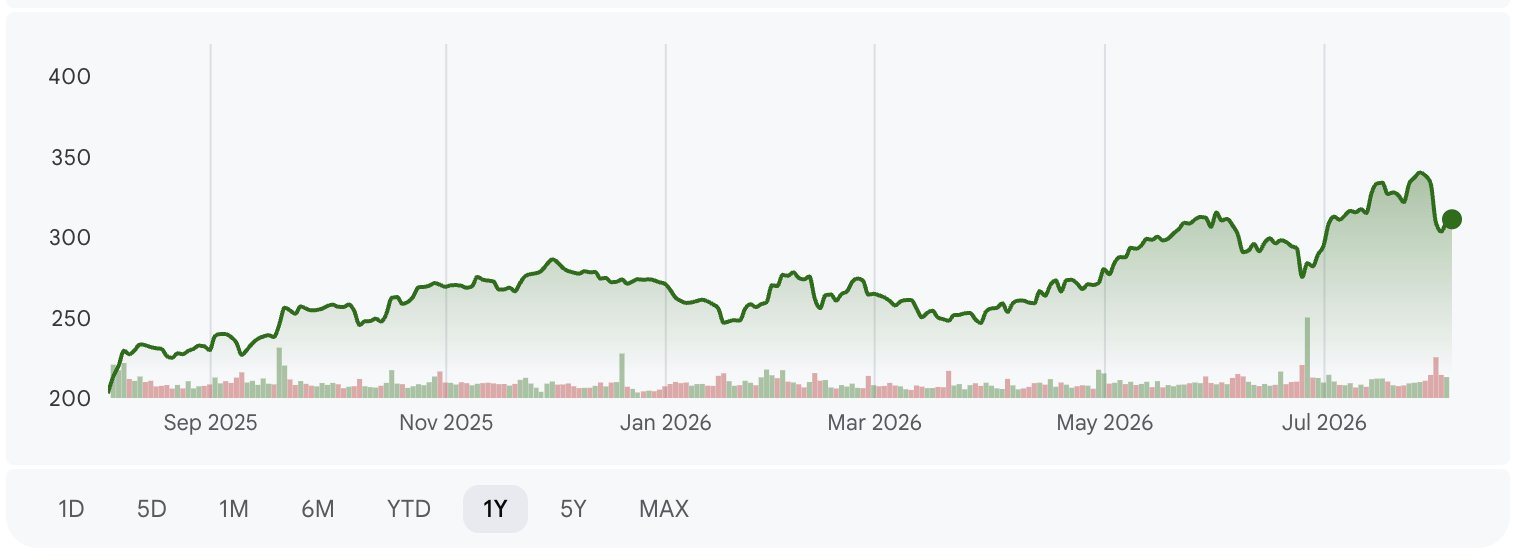
The stock spiked 52% in page views last week on Dividend.com for two reasons. First, Apple’s fiscal third-quarter results, reported July 30, beat expectations across the board: revenue hit a record $109.42 billion, up 16% year over year, and iPhone revenue grew 22% to $54.25 billion. Second, the company confirmed a leadership change. Tim Cook will step down as CEO on August 31 and become executive chairman, with John Ternus, currently head of hardware engineering, taking over on September 1. Guidance for next quarter came in a bit soft, with revenue growth projected at 9% to 11% amid rising memory costs and supply constraints.
Apple’s dividend yield is low, around 0.35%, reflecting a stock price that has outrun its payout. The payout ratio sits near 12% of earnings, among the lowest of any large dividend payer, and the company has raised its dividend for roughly 14 to 15 straight years since reinstating it in 2012. Income investors buy Apple for growth and buyback potential more than for current yield.
Shares are up sharply both year to date and over the past year, touching an all-time high before the guidance-driven pullback after earnings. Growth is coming from Services and continued iPhone demand, but the memory-cost spike Cook flagged, along with tariff and currency pressure, could squeeze margins in the near term. The leadership transition adds a layer of uncertainty that investors will watch closely into the fall.
Source: Google Finance
Exxon's Record Quarter Draws Political Fire
Exxon Mobil (XOM) is one of the world’s largest integrated oil and gas companies, with operations spanning upstream production, refining, chemicals, and specialty products across dozens of countries. Its scale, from Permian shale to Guyana’s offshore fields, lets it shift capital toward whichever business line offers the best returns in a given cycle.
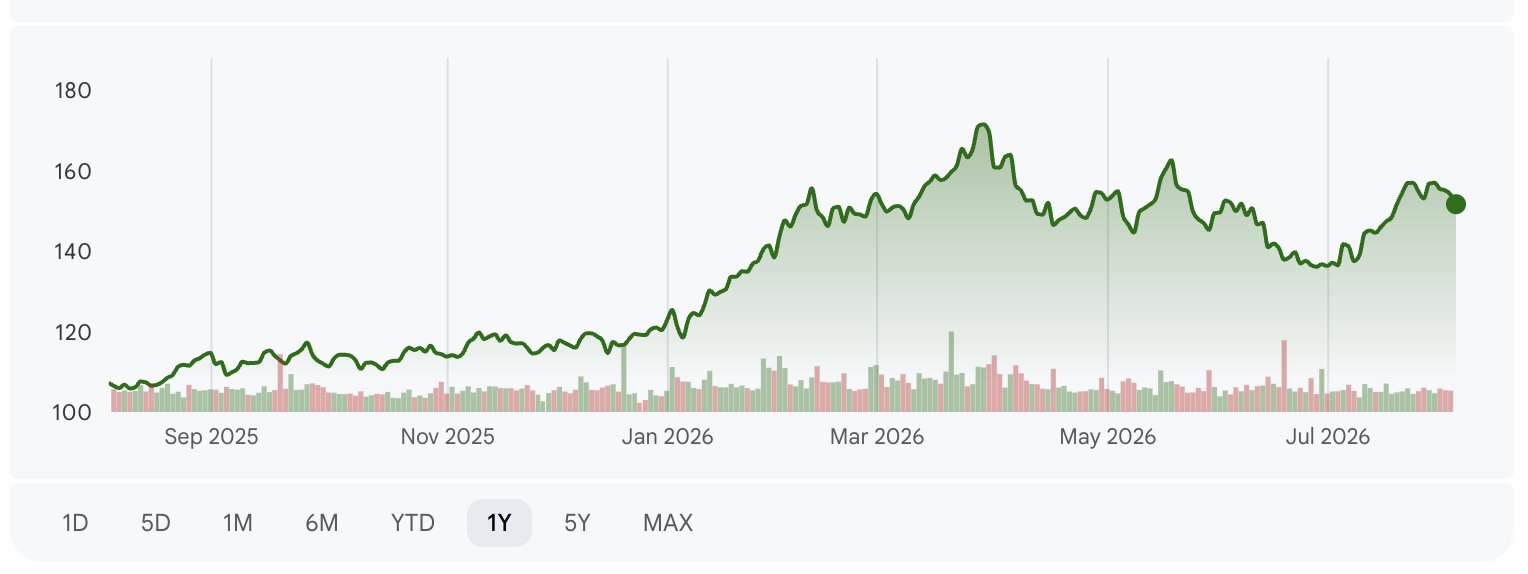
The 35.8% spike in Dividend.com traffic followed Exxon’s second-quarter report on July 31, which showed earnings of $14.5 billion, or $3.48 per share, on record upstream production and the highest Permian output in company history. Free cash flow came in at $17.2 billion, and the company returned $9.4 billion to shareholders through dividends and buybacks. Days later, President Trump publicly criticized Exxon and Chevron for what he called excessive profits, telling reporters the companies should cut retail prices, a comment that drew fresh attention to the stock.
Exxon yields about 2.7% at current prices, with a payout ratio in the mid-50% range against earnings, leaving room to keep raising the dividend even if oil prices soften. The company has increased its dividend for 43 consecutive years, a streak that puts it among the longest-running Dividend Aristocrats in the energy sector.
The stock has climbed both year to date and over the trailing year, helped by higher production volumes and disciplined capital spending. Guyana’s offshore output has already paid back its development costs, freeing up future cash flow, but the business remains tied to oil and gas prices. Political pressure on pricing, like the comments from the White House, adds a layer of headline risk that wasn’t there a year ago.
Source: Google Finance
64-year Dividend Growth Streak Underpins Coca-Cola's Record Rally
Coca-Cola (KO) makes and markets concentrates and finished beverages, from sparkling soft drinks to water, tea, coffee, and sports drinks, sold in more than 200 countries through a global network of licensed bottlers. That footprint, built over more than a century, gives Coca-Cola shelf space and brand recognition that newer beverage companies can’t easily replicate.
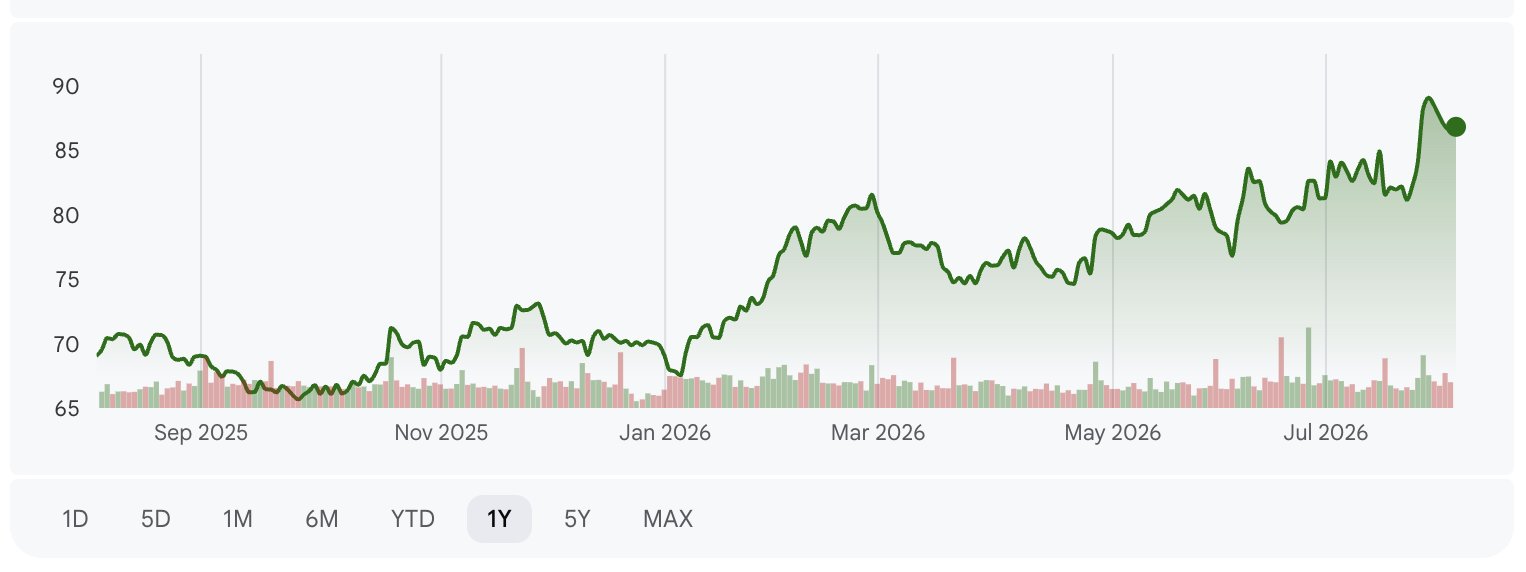
Dividend.com’s traffic on Coca-Cola jumped 34% after its July 28 earnings report, which beat estimates on nearly every line. Revenue rose 7% to $13.4 billion, comparable earnings per share grew 11% to $0.97, and global unit case volume increased 5%. Management raised full-year guidance, now calling for about 5% organic revenue growth and 9% to 10% comparable EPS growth, up from its prior outlook. The stock closed at an all-time high of $89.75 the same day.
Coca-Cola yields roughly 2.44% and pays out about 77% of earnings as dividends, a level that’s normal for a mature consumer staple with steady, predictable cash flow. The company raised its quarterly dividend from $0.51 to $0.53 in February, extending its streak to 64 consecutive years, the longest active run among Dividend Kings.
Shares are up meaningfully both year to date and over the past twelve months, with the World Cup marketing push adding to sales momentum this year. The main risk to watch is an unresolved IRS transfer-pricing dispute that could carry a substantial tax bill if it goes against the company, a legal overhang that has lingered for years without full resolution.
Source: Google Finance
Enterprise's Record Profit Extends 28-year Dividend Growth Streak
Enterprise Products Partners (EPD) runs one of the largest midstream networks in North America, gathering, processing, storing, and transporting natural gas, natural gas liquids, crude oil, and refined products through more than 50,000 miles of pipeline. As a master limited partnership, it collects fees on volumes moved rather than betting directly on commodity prices, which gives its cash flow more stability than a typical oil and gas producer.
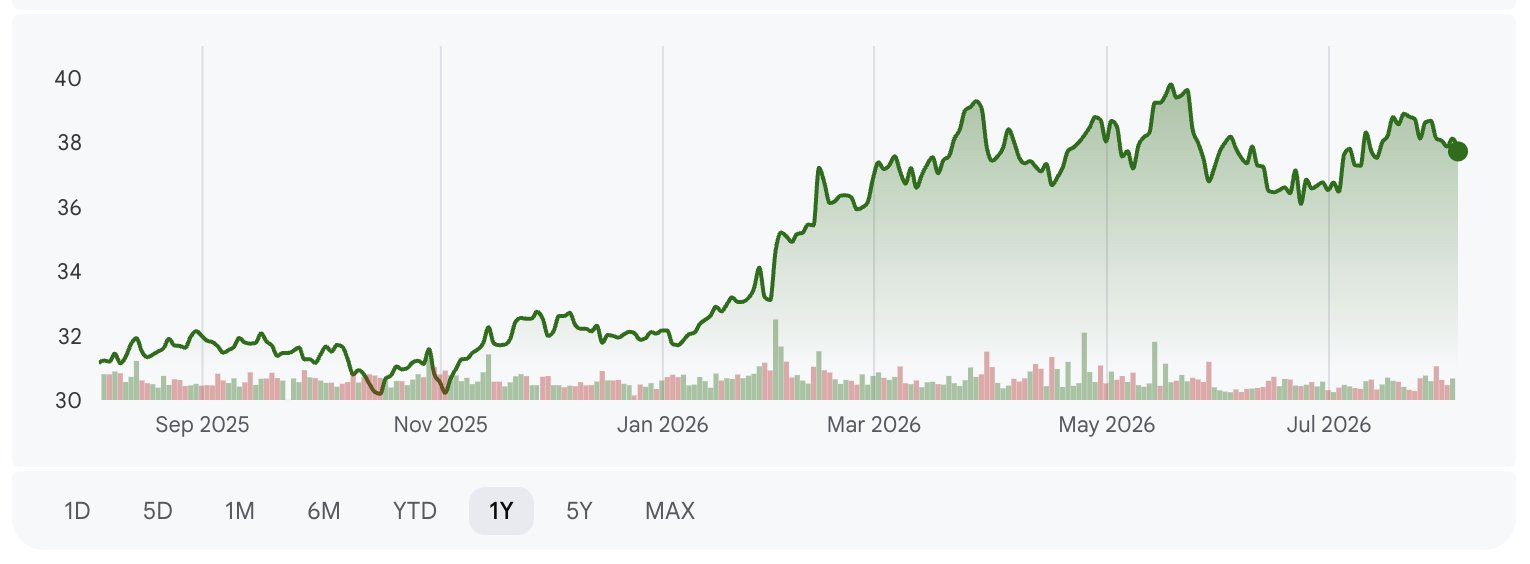
The 16.3% traffic spike on Dividend.com followed Enterprise’s July 30 earnings report, which showed record net income of $1.84 billion, up 28% from a year earlier, along with record adjusted EBITDA of $2.8 billion and record distributable cash flow of $2.3 billion. On top of that, the company announced its 28th straight annual distribution increase, and confirmed in early July that co-CEO Jim Teague will retire in January 2027, with co-CEO Randy Fowler stepping into the top role.
Because Enterprise is a master limited partnership, it’s best measured by distributable cash flow coverage rather than a standard payout ratio. The partnership covered its $0.56 per unit distribution 1.9 times over with distributable cash flow last quarter, leaving room to fund growth projects while still returning cash to unitholders. The distribution yields around 5.9% annualized. Enterprise issues a Schedule K-1 at tax time instead of a 1099, which adds some complexity for retirement accounts but comes with tax-deferral benefits in taxable accounts.
Units are higher both year to date and over the past year, though by less than the broader energy sector’s biggest movers. Growth is tied to roughly $6.5 billion in projects currently under construction, and management has hinted that distribution growth could pick up once that spending slows. The main risks are commodity-linked volume swings and the leadership transition set to play out over the next several months.
Source: Google Finance
The Bottom Line
Apple’s top spot confirms how closely investors are tracking the shift from Tim Cook to John Ternus, driven by record iPhone sales and softer near-term guidance. Exxon’s second-place finish shows that interest in energy names is tied to headline risk as much as earnings, driven by record production and public pressure over pump prices. Coca-Cola’s third-place showing points to steady demand for income names with fresh momentum behind them, driven by raised guidance and a new all-time high. Enterprise’s fourth-place finish reflects continued appetite for midstream cash flow, driven by strong results and an extended streak of distribution growth.
Be sure to check out Dividend.com’s News for the most trending news around income investing.