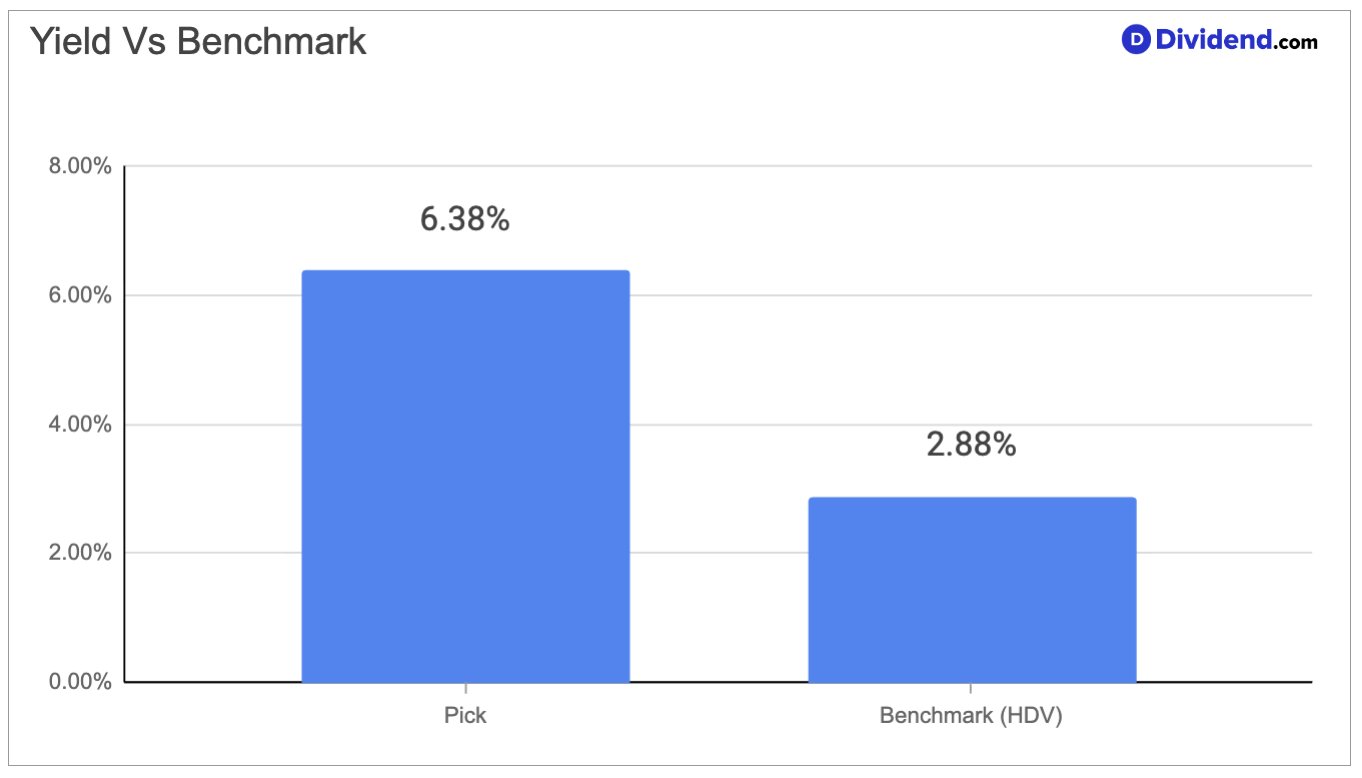
A real estate investment trust focused exclusively on experiential properties — including movie theaters, attraction parks, ski resorts, fitness centers, gaming facilities, and private education campuses — is generating a forward dividend yield of 6.38%, well above the 5.5% industry average for its peer group. This yield is not a sign of distress; it reflects a company that has emerged from a difficult post-pandemic period and is now accelerating investment, raising its dividend, and guiding for stronger earnings. The trust structures most of its leases as long-term triple-net agreements, which means tenants handle property maintenance costs, leaving the company with predictable, recurring rental income that anchors its monthly payout. The 5.1% increase in the annualized common dividend, now at $3.72 per share, is backed by a projected AFFO payout ratio comfortably below 70%, indicating that the dividend consumes a manageable share of cash generation and leaves meaningful room for reinvestment.
The business model centers on leasing physical spaces where consumers spend money on experiences rather than goods — a niche that has demonstrated resilient per-visit spending and repeat visitation patterns over time. The company’s tenant base spans entertainment operators, theme and regional park managers, ski and outdoor recreation facilities, and early education providers, creating diversification across experience categories.
Its primary growth driver heading into 2026 is the acceleration of its investment pipeline, highlighted by the single largest acquisition since the COVID era: a seven-asset regional park portfolio spanning more than 1,600 acres, acquired for $315 million from one of the best-known names in the regional park industry. This transaction deepens the trust’s position in attractions and recreation, which management has deliberately prioritized as it reduces its historical reliance on movie theater tenants. The balance sheet supports this expansion, with $68.5 million in cash and a fully undrawn $1.0 billion revolving credit facility providing the liquidity needed to execute on a growing pipeline.
Risks remain real and worth understanding: the tenant base is concentrated in leisure categories sensitive to consumer spending cycles, theater operators continue to face structural questions from streaming competition, and a net leverage ratio of 5.1x reflects a meaningful debt load, even though it sits below the 6.5x peer group average. Rising interest rates could compress the spread between borrowing costs and investment yields, slowing deal economics over time.
This combination of yield, growth momentum, and improving business fundamentals made the case for increasing our position in the Best Monthly Dividend Stocks Portfolio. The trust’s post-COVID repositioning appears to be gaining traction, with management raising both earnings and investment guidance simultaneously, a signal of confidence that deserves recognition in a portfolio built around dependable, growing monthly income.