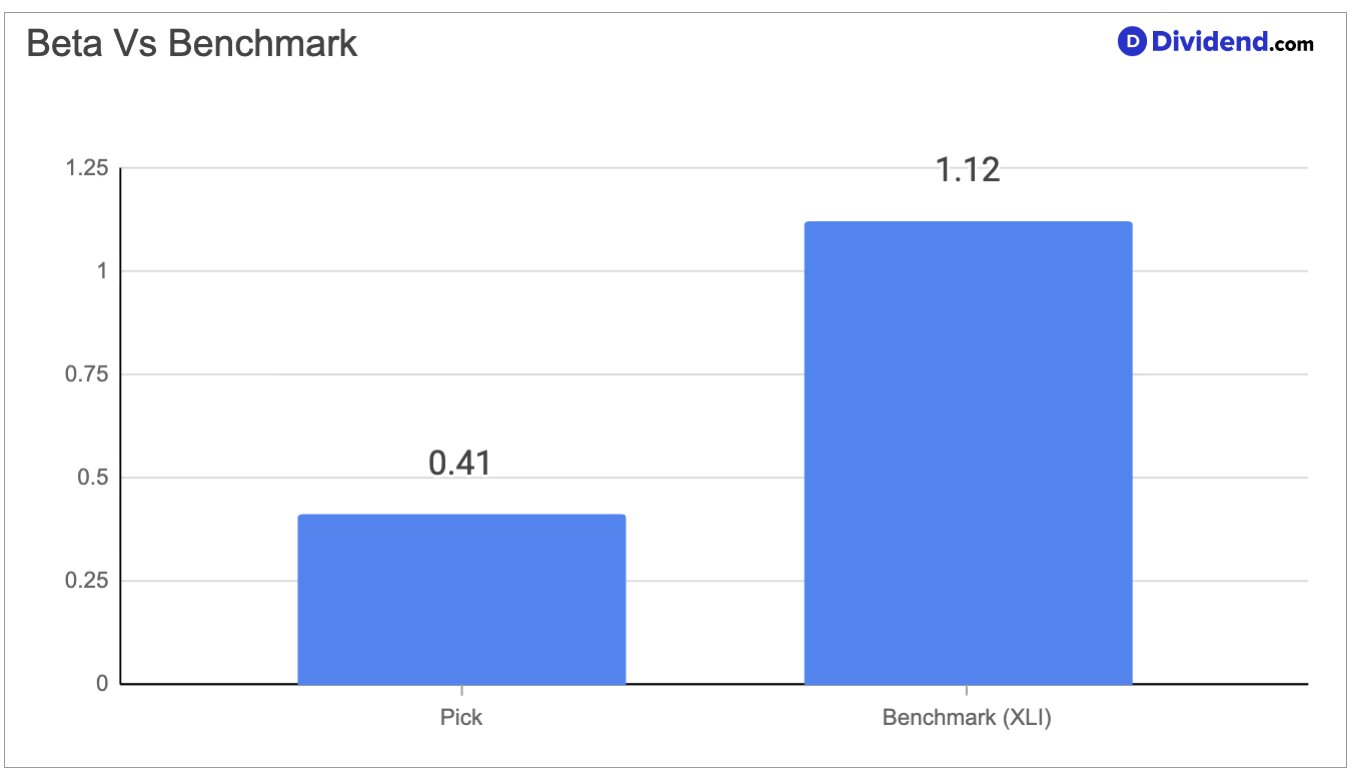
A $264 billion mega-cap at the heart of global aerospace and defense, this industrials giant has built a business that is as structurally resilient as it is strategically essential. With a beta of just 0.41 — less than half the 0.62 average for its peer group — the stock moves with remarkable calm relative to broader equity markets, offering income investors meaningful portfolio stability in uncertain times. Its 3-year dividend CAGR of 5% reflects a company that has grown its payout methodically, prioritizing consistency over aggression, which is precisely the kind of discipline that long-term dividend investors value. Operating three major business units — one serving commercial airlines and aircraft manufacturers with avionics and cabin systems, another producing jet engines for both military and civilian aircraft, and a third supplying battlefield-proven missile and radar systems to governments across more than 80 countries — this company commands extraordinary revenue diversity and contractual depth.
The investment case here is grounded in structural, long-cycle demand rather than cyclical momentum. On the commercial side, a sustained global recovery in air travel is driving demand for new engines and lucrative aftermarket maintenance services, which carry higher margins and greater predictability than original equipment manufacturing. On the defense side, rising NATO budgets and sustained geopolitical tension are generating unprecedented demand for missile defense systems, radar platforms, and advanced munitions — demand that this company is uniquely positioned to fulfill. A record backlog of over $200 billion, representing a book-to-bill ratio of 1.56 in the most recent fiscal year, provides extraordinary forward revenue visibility that few companies of any size can match.
The key risks to watch include the ongoing cost of remediating a manufacturing defect in one of its flagship engine programs, which has accumulated nearly $3 billion in compensation costs, ongoing tariff headwinds absorbed by its commercial aerospace segment, and supply chain bottlenecks in specialty inputs that could slow backlog conversion. Despite these challenges, the company’s scale, diversification, and operational discipline have kept it on a consistent growth trajectory.
This reaffirmation in the Best Industrial Dividend Stocks Portfolio reflects the company’s continued alignment with the portfolio’s mandate — delivering quality yield, strong dividend safety, and defensively low return volatility for income-focused investors seeking steady compounding over time.